Best Email Marketing Software for Small Businesses in 2026 (Compared & Reviewed)
best email marketing software
Looking for the best email marketing software in 2026? Compare the top email marketing tools for small businesses based on pricing, automation, templates, deliverability, and ease of use.
Email marketing continues to deliver one of the highest returns on investment (ROI) of any digital marketing strategy. While social media algorithms constantly change and paid advertising costs continue to rise, email remains a reliable way to reach customers directly.
For small businesses, startups, bloggers, freelancers, and online stores, choosing the right email marketing software can make the difference between struggling to generate sales and building a loyal customer base that buys repeatedly.
The best email marketing software doesn’t just send newsletters. Modern platforms now include powerful automation, customer segmentation, AI-powered content generation, analytics, landing pages, CRM integrations, and sales funnels—all designed to help businesses grow faster while saving time.
But with dozens of email marketing tools available, choosing the right one can feel overwhelming.
In this guide, we’ll compare the best email marketing software for small businesses in 2026, highlighting their strengths, weaknesses, pricing, and ideal use cases so you can confidently choose the platform that fits your goals.
⸻
Table of Contents
1. Why Email Marketing Still Matters in 2026
2. What Makes Great Email Marketing Software?
3. Comparison Table
4. Best Email Marketing Software
• Mailchimp
• Brevo
• ConvertKit
• ActiveCampaign
• GetResponse
• MailerLite
• Constant Contact
• Omnisend
5. How to Choose the Right Platform
6. Frequently Asked Questions
7. Final Verdict
⸻
Why Email Marketing Still Matters in 2026
Despite the rise of AI chatbots, social commerce, and short-form video platforms, email marketing remains one of the few marketing channels that businesses truly own.
Unlike social media followers, your email list belongs to you. No algorithm changes can suddenly reduce your reach overnight.
According to multiple marketing studies, email marketing consistently delivers one of the highest ROIs among digital marketing channels, making it especially valuable for small businesses with limited budgets.
Some key benefits include:
• Building long-term customer relationships
• Driving repeat purchases
• Increasing website traffic
• Recovering abandoned shopping carts
• Promoting new products and services
• Growing brand awareness
• Generating passive sales through automation
⸻
What Makes the Best Email Marketing Software?
Before selecting an email marketing platform, consider these essential features.
1. Easy Email Builder
Look for drag-and-drop editors that allow anyone to create professional emails without coding knowledge.
The best platforms include hundreds of customizable templates.
⸻
2. Marketing Automation
Automation saves countless hours by sending emails based on customer behavior.
Examples include:
• Welcome emails
• Birthday emails
• Cart abandonment reminders
• Product recommendations
• Re-engagement campaigns
This is why businesses increasingly prioritize the best email automation software rather than basic newsletter tools.
⸻
3. Audience Segmentation
Successful email campaigns send personalized content.
Your software should allow you to group subscribers by:
• Purchase history
• Interests
• Country
• Website activity
• Customer value
• Engagement level
⸻
4. Deliverability
Even beautifully designed emails are useless if they land in spam folders.
Choose software known for:
• High inbox placement
• Spam testing
• Authentication tools
• Domain verification
⸻
5. Analytics
The best email marketing tools provide detailed reports including:
• Open rates
• Click-through rates
• Conversion rates
• Revenue tracking
• Bounce rates
• Subscriber growth
⸻
6. Integrations
Modern businesses rely on multiple tools.
Good email platforms integrate with:
• Shopify
• WooCommerce
• WordPress
• Stripe
• Zapier
• Salesforce
• HubSpot
• Google Analytics
⸻
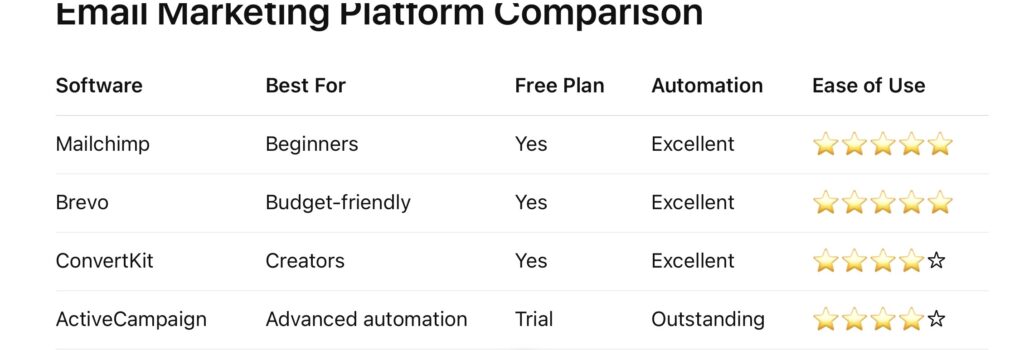
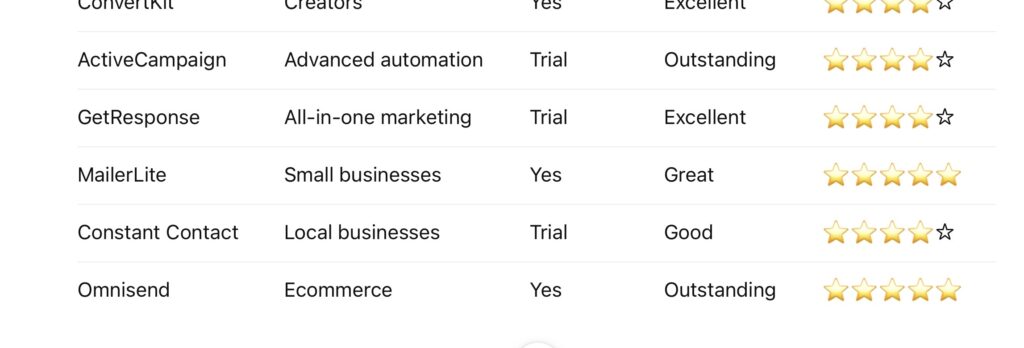
Email Marketing Platform Comparison
⸻
1. Mailchimp
Best For
Small businesses and beginners.
Mailchimp remains one of the most recognizable names in email marketing.
Its beginner-friendly interface makes it easy to create newsletters, automate campaigns, and analyze performance without technical expertise.
Pros
• Free plan available
• Large template library
• AI-powered email writing
• Strong analytics
• Easy drag-and-drop editor
Cons
• Automation features become expensive
• Premium plans can be costly as your list grows
Best For
• Bloggers
• Startups
• Local businesses
• Service providers
• Beginners
⸻
2. Brevo
Formerly known as Sendinblue, Brevo has evolved into one of the best value email marketing platforms available.
Instead of charging based on subscriber count, Brevo primarily limits the number of emails sent, making it especially attractive for businesses with large contact lists but moderate sending needs.
Why Businesses Love Brevo
• Affordable pricing
• Built-in CRM
• SMS marketing
• WhatsApp campaigns
• Marketing automation
• Transactional emails
• Landing pages
Best For
Businesses looking for affordable yet powerful email marketing software for small business needs without sacrificing automation.
⸻
Part 2 will continue with detailed reviews of ConvertKit, ActiveCampaign, GetResponse, MailerLite, Constant Contact, and Omnisend, followed by actionable tips, real-world examples, FAQs, internal linking suggestions, and a strong SEO-focused conclusion.
Part 2
3. ConvertKit
Best For
Content creators, bloggers, YouTubers, coaches, and digital product sellers.
ConvertKit (now branded as Kit) has become one of the most popular email newsletter softwareplatforms for creators. Instead of focusing only on newsletters, it helps build an audience and monetize through digital products, memberships, and paid newsletters.
Key Features
• Visual automation builder
• Landing pages
• Signup forms
• Audience tagging
• Creator-focused templates
• Digital product sales
• Paid newsletter support
Pros
• Easy to learn
• Excellent subscriber management
• Powerful automation
• Great deliverability
• Ideal for growing a personal brand
Cons
• Fewer templates than some competitors
• More expensive than beginner-focused tools
Best For
• Bloggers
• Authors
• Online educators
• Podcasters
• Freelancers
• Influencers
⸻
4. ActiveCampaign
Best For
Businesses that want advanced automation and customer relationship management (CRM).
If automation is your top priority, ActiveCampaign consistently ranks among the best email automation software available. It combines email marketing with sales automation, lead scoring, and CRM features to help businesses nurture leads from first contact to purchase.
Standout Features
• Advanced workflow automation
• Built-in CRM
• AI campaign optimization
• Dynamic content personalization
• Predictive sending
• Site tracking
• Lead scoring
Pros
• Industry-leading automation
• Excellent reporting
• Powerful segmentation
• Great for scaling businesses
• Strong integrations
Cons
• Learning curve for beginners
• No permanent free plan
Best For
• Growing startups
• SaaS companies
• Agencies
• B2B businesses
• Businesses with larger sales funnels
⸻
5. GetResponse
Best For
Businesses looking for an all-in-one marketing platform.
GetResponse offers much more than email marketing. It includes webinars, landing pages, sales funnels, website builders, and marketing automation in one dashboard.
Features
• AI email creator
• Landing pages
• Webinar hosting
• Website builder
• Sales funnels
• Automation workflows
• Ecommerce integration
Pros
• Excellent value
• Multiple marketing tools
• Easy-to-use interface
• Good automation
• Built-in webinars
Cons
• Some advanced tools require higher-tier plans
• Template customization could be improved
Best For
• Small businesses
• Ecommerce stores
• Coaches
• Consultants
• Online service providers
⸻
6. MailerLite
Best For
Budget-conscious small businesses.
MailerLite has gained a strong reputation for offering premium features at affordable prices. Its clean interface and generous free plan make it one of the easiest email marketing tools for beginners.
Features
• Drag-and-drop editor
• Landing pages
• Website builder
• Pop-ups
• Automation
• Subscriber segmentation
• A/B testing
Pros
• Affordable pricing
• Fast setup
• Excellent user experience
• Strong deliverability
• Modern templates
Cons
• Smaller template library than some competitors
• Limited CRM capabilities
Best For
• Freelancers
• Bloggers
• Local businesses
• Small online stores
• New entrepreneurs
⸻
7. Constant Contact
Best For
Traditional small businesses and nonprofits.
Constant Contact has served small businesses for many years and continues to be a trusted choice for organizations that prioritize simplicity and reliable customer support.
Features
• Professional templates
• Social media scheduling
• Event marketing
• Contact management
• Surveys
• Email automation
• Reporting dashboard
Pros
• Excellent customer support
• Easy setup
• Reliable email delivery
• Great for beginners
• Helpful training resources
Cons
• Limited automation compared to competitors
• Higher pricing than some alternatives
Best For
• Restaurants
• Local shops
• Community organizations
• Nonprofits
• Service-based businesses
⸻
8. Omnisend
Best For
Ecommerce businesses.
If you run an online store, Omnisend is one of the strongest options available. It combines email marketing with SMS marketing, push notifications, and ecommerce automation.
Key Features
• Cart abandonment emails
• Product recommendations
• SMS marketing
• Push notifications
• Customer segmentation
• Shopify integration
• WooCommerce integration
Pros
• Designed specifically for ecommerce
• Powerful automation
• Excellent sales tracking
• Easy product integration
• High conversion potential
Cons
• Less suitable for service-based businesses
• Some advanced features require paid plans
Best For
• Shopify stores
• WooCommerce stores
• Fashion brands
• Beauty brands
• Online retailers
⸻
How to Choose the Right Email Marketing Software
Choosing the best email marketing software depends on your goals, budget, and business type. Asking yourself the following questions can make the decision much easier.
1. How Large Is Your Email List?
Some providers charge based on the number of subscribers, while others charge based on the number of emails you send. If you expect your subscriber list to grow quickly, compare long-term pricing—not just the entry-level plan.
2. Do You Need Automation?
If your strategy includes welcome emails, abandoned cart reminders, lead nurturing, or customer follow-ups, choose software with strong automation capabilities.
3. Will It Integrate With Your Existing Tools?
Your email platform should connect easily with your website, ecommerce platform, CRM, payment processor, and analytics tools to reduce manual work.
4. Is It Easy to Use?
A clean, intuitive dashboard can save hours of training and setup, especially if you’re a solo entrepreneur or small team.
5. Can It Scale With Your Business?
Switching email platforms later can be time-consuming. Choose one that can support your growth over the next few years, even if you start on a free plan.
⸻
Actionable Tips for Better Email Marketing Results
• Build your email list organically instead of buying subscribers.
• Personalize subject lines and email content whenever possible.
• Segment your audience based on interests and behavior.
• Test different subject lines with A/B testing.
• Keep emails mobile-friendly, as many users read email on smartphones.
• Include one clear call-to-action (CTA) in each email.
• Remove inactive subscribers regularly to improve deliverability.
• Monitor analytics and adjust campaigns based on performance.
• Automate welcome sequences to engage new subscribers immediately.
• Send consistent, valuable content instead of only promotional emails.
Part 3
Real-World Examples
Seeing how different businesses use email marketing can help you choose the right platform for your own needs.
Example 1: A Local Bakery Builds Customer Loyalty
Imagine a family-owned bakery that wants more repeat customers. Instead of relying only on social media, the owner starts collecting customer email addresses through the website and in-store QR codes.
Using an email marketing platform, the bakery sends:
• Weekly specials
• Birthday discount coupons
• Holiday promotions
• New product announcements
Within a few months, repeat purchases increase because customers receive timely reminders and exclusive offers directly in their inboxes.
Lesson: Even a small local business can use email marketing to encourage repeat sales and strengthen customer relationships.
⸻
Example 2: A Blogger Grows Affiliate Income
A personal finance blogger publishes articles about budgeting, investing, and side hustles. Each article includes a free downloadable budgeting template in exchange for an email address.
The blogger then creates an automated email sequence that:
• Welcomes new subscribers
• Shares the most popular articles
• Recommends useful financial tools
• Includes affiliate links to relevant software
As the email list grows, affiliate commissions increase because readers continue receiving valuable recommendations long after their first visit.
Lesson: Email marketing helps turn one-time visitors into long-term readers and customers.
⸻
Example 3: An Ecommerce Store Recovers Lost Sales
An online clothing store notices many shoppers add products to their carts but leave without completing their purchases.
Using email automation, the store sends:
• A reminder one hour after cart abandonment
• A follow-up email the next day featuring customer reviews
• A limited-time discount after 48 hours
These automated messages recover sales that would otherwise have been lost.
Lesson: Automation can generate revenue without requiring manual follow-up.
⸻
Which Email Marketing Software Should You Choose?
The best platform depends on your business goals.
If You Are… Recommended Software Why It Fits
A complete beginner Mailchimp Easy setup, generous free plan, intuitive interface
On a tight budget Brevo or MailerLite Affordable pricing with strong core features
A blogger or creator ConvertKit (Kit) Designed for audience building and digital products
A fast-growing business ActiveCampaign Powerful automation and CRM capabilities
Looking for an all-in-one solution GetResponse Includes funnels, landing pages, webinars, and email
Running an online store Omnisend Built for ecommerce with cart recovery and SMS
A local business or nonprofit Constant Contact Reliable support and simple campaign management
⸻
Frequently Asked Questions
What is the best email marketing software in 2026?
There is no single platform that is perfect for everyone. Mailchimp remains an excellent option for beginners, ActiveCampaign leads in automation, Omnisend is ideal for ecommerce, and MailerLite and Brevo offer outstanding value for small businesses.
⸻
Which email marketing software has the best free plan?
MailerLite, Brevo, Mailchimp, ConvertKit (Kit), and Omnisend all provide free plans that are suitable for many small businesses starting out.
⸻
What is the best email automation software?
If automation is your top priority, ActiveCampaign is widely regarded as one of the strongest options thanks to its advanced workflows, lead scoring, and CRM integration. Omnisend is another excellent choice for ecommerce businesses.
⸻
Is email marketing still worth it in 2026?
Yes. Email remains one of the highest-ROI marketing channels because it gives businesses direct access to their audience without depending on changing social media algorithms.
⸻
How often should I send marketing emails?
Quality matters more than quantity. For many businesses, sending one well-crafted email each week is enough to stay top of mind. Monitor your open and unsubscribe rates to find the right frequency for your audience.
⸻
Can small businesses use free email marketing software?
Absolutely. Many platforms offer generous free plans with features like templates, signup forms, basic automation, and analytics. As your subscriber list and marketing needs grow, you can upgrade to a paid plan.
⸻
Final Verdict
Choosing the best email marketing software is one of the most important decisions a small business can make. The right platform can help you attract new customers, build stronger relationships, and increase revenue through targeted campaigns and automation.
If you’re just starting, a user-friendly platform like Mailchimp or MailerLite can help you launch quickly. If affordability is your priority, Brevo offers impressive value. Creators may prefer ConvertKit (Kit), while businesses with advanced marketing needs can benefit from ActiveCampaign. Ecommerce stores should strongly consider Omnisend for its specialized features.
Whichever platform you choose, success depends on more than the software itself. Focus on building a quality email list, delivering valuable content, segmenting your audience, and using automation strategically. Over time, these practices can turn email into one of your most profitable marketing channels.
Start with the platform that matches your current needs, learn its features thoroughly, and scale your strategy as your business grows. A consistent, customer-focused email marketing approach can deliver long-term results well beyond 2026.
HOW TO MAKE MONEY ONLINE IN 2026: BEGINNER’S GUIDE
BEST AI TOOLS TO START A FREELANCE BUSINESS IN 2026
HOW BEGINNERS MAKE MONEY WITH CHATGPT IN 2026: 12 PROVEN WAYS TO START EARNING ONLINE
