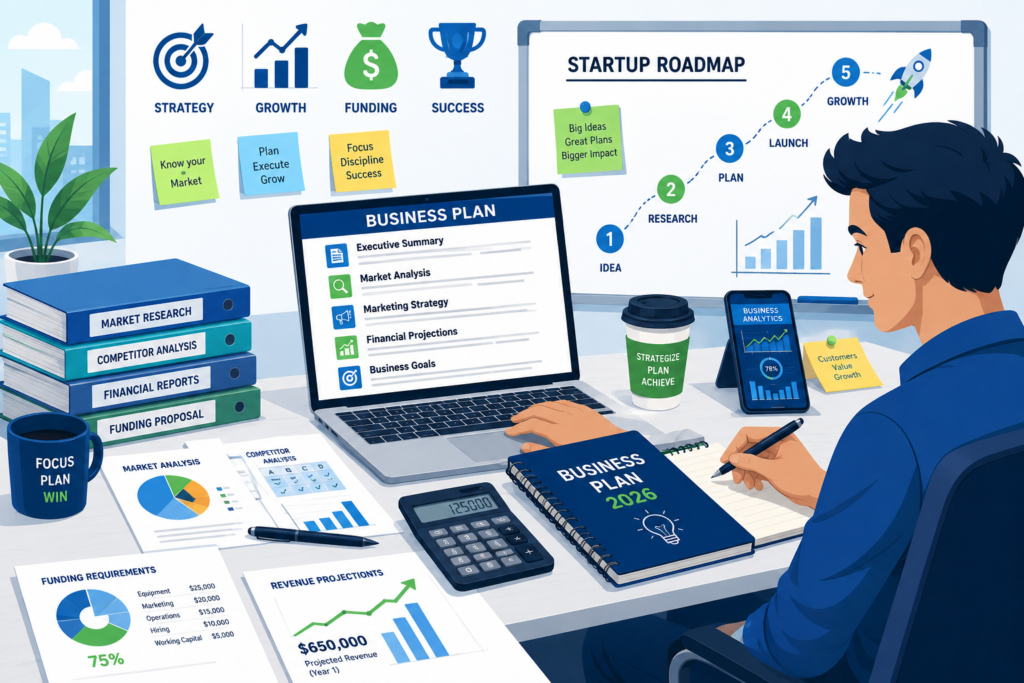
How to Write a Business Plan That Actually Works (Step-by-Step Guide for Beginners in 2026)
Learn how to write a business plan that actually works with this complete beginner’s guide. Discover how to create an executive summary, market analysis, financial projections, business goals, and use a free business plan template to launch your startup successfully.
Starting a business is exciting. You have an idea that keeps you awake at night, a product people might love, or a service that solves a real problem. But there’s one thing that separates successful entrepreneurs from those who struggle: a well-written business plan.
Many people think a business plan is just a document required by banks or investors. In reality, it’s much more than that. It’s your roadmap. It tells you where you’re going, how you’ll get there, what obstacles you’ll face, and how you’ll overcome them.
Businesses without clear plans often waste money, chase the wrong customers, underestimate costs, and lose focus. On the other hand, businesses with structured plans make better decisions because every action aligns with their long-term vision.
Whether you’re launching an online store, opening a restaurant, starting a consulting agency, creating a software company, or building a freelance business, this guide will show you exactly how to create a business plan that actually works—not one that sits forgotten in a drawer.
By the end of this article, you’ll know how to write each section confidently, avoid common mistakes, and even use a free business plan template to speed up the process.
Table of Contents
- What Is a Business Plan?
- Why Every Business Needs One
- Types of Business Plans
- Step 1: Write an Executive Summary
- Step 2: Describe Your Business
- Step 3: Conduct Market Analysis
- Step 4: Competitor Research
- Step 5: Define Your Products or Services
- Step 6: Create Your Marketing Strategy
- Step 7: Set Business Goals
- Step 8: Build Financial Projections
- Step 9: Funding Requirements
- Free Business Plan Template
- Common Business Plan Mistakes
- Actionable Tips
- Frequently Asked Questions
- Conclusion
What Is a Business Plan?
A business plan is a detailed document explaining what your business does, who it serves, how it makes money, and how it plans to grow.
Think of it as the blueprint for your company.
It includes:
- Executive summary
- Company description
- Products or services
- Market research
- Competitor analysis
- Marketing strategy
- Operations
- Financial projections
- Funding needs
- Business goals
A good business plan isn’t just written once. It’s updated regularly as your company evolves.
Why Every Business Needs One
Many startups fail because they skip planning.
A business plan helps you:
- Stay focused on your objectives
- Understand your customers
- Predict expenses
- Estimate profits
- Attract investors
- Secure business loans
- Reduce unnecessary risks
- Make smarter decisions
Even solo entrepreneurs and freelancers benefit from having a clear strategy.
Real-World Example
Imagine two people starting coffee shops.
Owner A
- No business plan
- Doesn’t research competitors
- Orders expensive equipment
- Doesn’t know customer demand
After six months, sales are disappointing.
Owner B
Researches nearby coffee shops, identifies demand for specialty drinks, creates a marketing strategy, estimates monthly costs, and secures enough funding before opening.
Owner B has a much higher chance of success because decisions are based on research rather than guesswork.
Types of Business Plans
| Business Type | Best For | Length |
| Traditional Business Plan | Investors & Banks | 20–50 pages |
| Lean Startup Plan | New Startups | 1–5 pages |
| Internal Business Plan | Team Planning | Flexible |
| Growth Business Plan | Expanding Businesses | Medium |
| Strategic Business Plan | Long-Term Direction | Medium to Long |
Beginners usually benefit most from a Lean Startup plan before expanding into a full traditional business plan.
Step 1: Write an Executive Summary
The executive summary is the most important part of your business plan.
Although it appears first, write it last.
It should briefly explain:
- Business name
- Mission
- Products or services
- Target market
- Competitive advantage
- Financial highlights
- Funding request (if applicable)
Example
Business Name
Fresh Brew Coffee
Mission
Provide premium specialty coffee using locally sourced ingredients.
Target Audience
Young professionals aged 20–45.
Competitive Advantage
Fast service, premium quality, subscription coffee plans.
Keep this section under one page.
Step 2: Describe Your Business
Explain exactly what your company does.
Include:
- Business structure
- Location
- Industry
- Business model
- Vision
- Mission
- Long-term objectives
Example:
“We help small businesses grow online through SEO, web design, and digital marketing.”
Step 3: Conduct Market Analysis
A great business plan relies on research.
Study:
- Industry trends
- Market size
- Customer demographics
- Buying habits
- Market demand
- Growth opportunities
Questions to answer:
Who are your customers?
What problems do they face?
Why would they choose your business?
Where do they spend money?
Real-World Example
Instead of opening another generic clothing store, research shows local demand for sustainable fashion.
You position your brand around eco-friendly clothing, instantly differentiating yourself.
Step 4: Competitor Research
Every business has competitors.
Study:
- Prices
- Products
- Reviews
- Marketing
- Customer service
- Website
- Social media
Create a SWOT analysis.
| Strengths | Weaknesses |
| Better customer service | New brand |
| Opportunities | Threats |
| Growing demand | Large competitors |
Don’t copy competitors.
Learn from them.
Step 5: Define Your Products or Services
Describe exactly what you sell.
Include:
- Features
- Benefits
- Pricing
- Production process
- Future improvements
Focus on customer benefits rather than features.
Instead of:
“24-hour support.”
Say:
“Customers receive immediate help whenever problems arise.”
Step 6: Create Your Marketing Strategy
Even the best product won’t sell without marketing.
Your marketing strategy should include:
Branding
- Logo
- Colors
- Voice
- Positioning
Digital Marketing
- SEO
- Content marketing
- Email marketing
- Social media
- PPC advertising
Offline Marketing
- Networking
- Flyers
- Events
- Partnerships
Marketing Funnel
Awareness → Interest → Consideration → Purchase → Loyalty
Each stage should have a strategy.
Real-World Example
A startup fitness coach grows through:
- Blogging
- YouTube tutorials
- Email newsletter
- Free workout guides
Instead of spending thousands on ads.
Step 7: Set Business Goals
Every business needs measurable goals.
Use SMART goals.
Specific
Measurable
Achievable
Relevant
Time-bound
Example:
❌ Increase sales.
✅ Increase monthly revenue by 20% within six months.
Examples of business goals:
- Reach 10,000 website visitors
- Gain 500 customers
- Launch three new products
- Expand internationally
- Hire five employees
Step 8: Build Financial Projections
Many entrepreneurs fear this section.
It doesn’t need to be perfect.
Estimate:
- Startup costs
- Monthly expenses
- Revenue
- Profit
- Cash flow
- Break-even point
Example
| Item | Cost |
| Website | $800 |
| Equipment | $3,000 |
| Marketing | $1,500 |
| Licenses | $700 |
| Inventory | $5,000 |
Total Startup Cost:
$11,000
Monthly Revenue Projection
| Month | Revenue |
| January | $3,000 |
| February | $4,200 |
| March | $5,100 |
| April | $6,500 |
These projections help investors understand your expected growth.
Step 9: Funding Requirements
If you’re seeking funding, explain:
- How much money you need
- Why you need it
- How you’ll spend it
- Expected return
Example
Seeking:
$75,000
Used for:
- Equipment
- Marketing
- Hiring
- Inventory
- Working capital
Investors appreciate transparency.
Free Business Plan Template
Use this simple structure:
Business Name
Mission Statement
Executive Summary
Business Description
Market Analysis
Competitor Research
Products & Services
Marketing Strategy
Operations Plan
Business Goals
Financial Projections
Funding Requirements
Appendix
This template can be expanded as your business grows.
Common Business Plan Mistakes to Avoid
❌ Skipping market research
❌ Unrealistic financial projections
❌ Ignoring competitors
❌ Writing vague goals
❌ Forgetting customer needs
❌ Overestimating revenue
❌ Underestimating expenses
❌ Not updating the plan regularly
Actionable Tips
- Write your executive summary last so it accurately reflects the completed plan.
- Validate your idea by talking to potential customers before investing heavily.
- Use reliable data for your market analysis instead of assumptions.
- Set quarterly business goals and review them regularly.
- Keep your financial projections realistic and include a contingency budget.
- Revisit your business plan every three to six months as your business evolves.
- Tailor your plan to your audience—investors, lenders, or internal teams may each need different levels of detail.
- Include measurable KPIs (such as customer acquisition cost, revenue growth, and profit margin) to track progress.
- Back up important claims with research and customer feedback where possible.
- Treat your business plan as a living document rather than a one-time assignment.
Frequently Asked Questions
How long should a business plan be?
It depends on your purpose. A lean startup business plan can be as short as one to five pages, while a traditional plan for investors may range from 20 to 50 pages.
Do small businesses need a business plan?
Yes. Even a one-person business benefits from having clear business goals, financial projections, and a marketing strategy.
How often should I update my business plan?
Review it every three to six months or whenever there are significant changes in your business, industry, or financial situation.
Can I use a free business plan template?
Absolutely. A template provides structure and ensures you don’t overlook important sections. You should customize it to reflect your unique business model and goals.
What is the most important part of a business plan?
The executive summary is often the first section investors read, but every part is important. Strong market analysis, realistic financial projections, and a clear marketing strategy work together to create a compelling plan.
Do investors always require financial projections?
Yes. Investors typically want to see projected revenue, expenses, cash flow, and profitability to understand the viability and growth potential of your business.
Conclusion
A successful business plan is much more than paperwork—it’s the strategic foundation of a thriving business. By taking the time to define your vision, conduct thorough market analysis, research competitors, establish measurable business goals, develop a solid marketing strategy, and create realistic financial projections, you’ll be better prepared to make informed decisions and adapt as your business grows.
Remember, your business plan isn’t meant to be static. As your customers, market conditions, and objectives evolve, revisit and refine your plan to keep it relevant. Whether you’re launching a startup, expanding an existing company, or seeking funding from investors, a well-crafted business plan demonstrates professionalism, builds confidence, and provides a clear path toward sustainable success.
Start with the free template provided in this guide, focus on solving real customer problems, and let your business plan serve as the roadmap that turns your ideas into measurable results.
15 Profitable Small Business Ideas You Can Start With Low Investment (2026 Guide)
