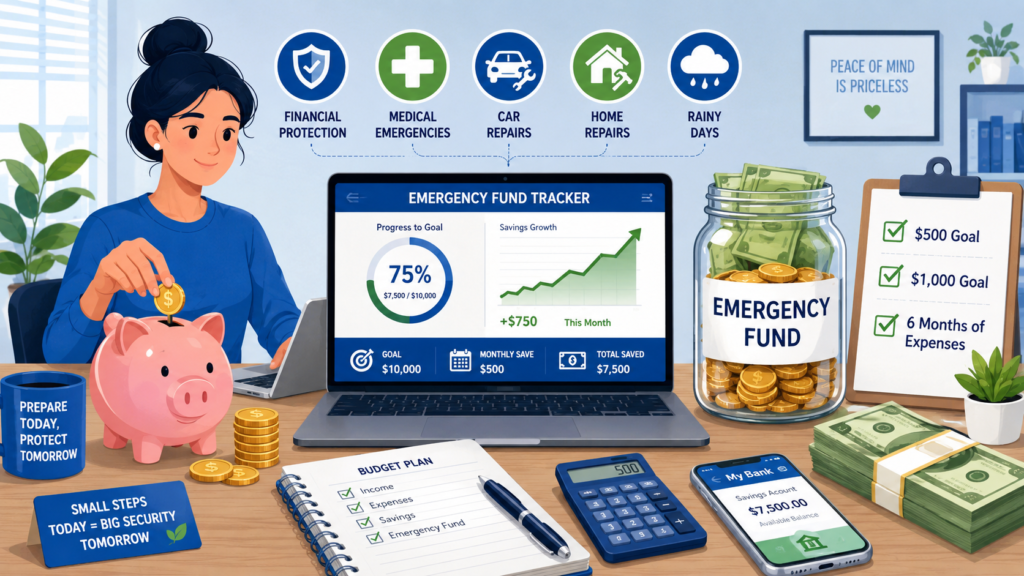
How to Build Your First Emergency Fund: A Beginner’s Step-by-Step Plan (2026 Beginner’s Guide)
Learn how to build your first emergency fund with this beginner-friendly step-by-step guide. Discover why everyone needs one, how much to save, where to keep it, how to save faster, common mistakes to avoid, and practical tips to achieve financial security.
How to Build Your First Emergency Fund: A Beginner’s Step-by-Step Plan
Unexpected expenses are a part of life. Whether it’s a medical emergency, a broken appliance, a sudden car repair, or losing your job, financial surprises can happen when you least expect them. Unfortunately, many people are forced to rely on credit cards or loans simply because they don’t have savings set aside for emergencies.
This is where an emergency fund becomes one of the most powerful financial tools you can have.
An emergency fund is more than just money in a savings account—it’s your financial safety net. It provides peace of mind, helps you avoid debt, and allows you to face life’s unexpected challenges without disrupting your long-term financial goals.
The good news is that building an emergency fund doesn’t require a six-figure salary or years of financial experience. Even small, consistent savings can grow into a strong financial cushion over time.
In this guide, you’ll learn why everyone needs an emergency fund, how much you should save, where to keep your money, how to build your savings faster, common mistakes to avoid, and a simple step-by-step plan to get started today.
Table of Contents
- What Is an Emergency Fund?
- Why Everyone Needs an Emergency Fund
- What Counts as an Emergency?
- How Much Should You Save?
- Emergency Fund Savings Goals
- Where Should You Keep Your Emergency Fund?
- Step-by-Step Plan to Build Your First Emergency Fund
- How to Save Faster
- Real-World Examples
- Common Mistakes to Avoid
- Frequently Asked Questions
- Final Thoughts
What Is an Emergency Fund?
An emergency fund is money that you set aside specifically for unexpected expenses.
It is not money for vacations, birthdays, shopping, or entertainment. Instead, it’s reserved for genuine emergencies that require immediate financial attention.
Examples include:
- Medical emergencies
- Job loss
- Car repairs
- Home repairs
- Emergency travel
- Replacing a broken refrigerator or washing machine
- Sudden income loss
- Unexpected veterinary bills
Think of your emergency fund as self-funded insurance. It gives you immediate access to cash when life throws an unexpected challenge your way.
Why Everyone Needs an Emergency Fund
Many people believe emergencies won’t happen to them. Unfortunately, unexpected expenses are a normal part of life.
Here are the biggest reasons every person should have an emergency fund.
1. It Reduces Financial Stress
Financial emergencies are stressful enough without worrying about how you’ll pay for them.
Knowing you already have money saved provides peace of mind and reduces anxiety.
2. It Helps You Avoid Debt
Without emergency savings, many people rely on:
- Credit cards
- Payday loans
- Personal loans
- Borrowing from family and friends
These solutions often come with interest charges that make the situation even worse.
3. It Protects Your Financial Goals
Imagine you’ve spent years saving for a home, retirement, or your child’s education.
One unexpected expense could force you to use that money.
An emergency fund protects your long-term savings from short-term problems.
4. It Gives You Financial Freedom
Having emergency savings allows you to make better decisions.
For example:
- Taking time to find the right job after being laid off.
- Paying for urgent repairs immediately.
- Handling medical expenses without panic.
- Avoiding unnecessary financial pressure.
Money can’t stop emergencies from happening, but it can make them much easier to manage.
What Counts as an Emergency?
One of the biggest mistakes people make is using emergency savings for non-emergencies.
Use this simple rule:
Ask yourself:
“Is this unexpected, necessary, and urgent?”
If the answer is yes, it’s likely a genuine emergency.
Emergency vs Non-Emergency
| Emergency ✅ | Not an Emergency ❌ |
| Medical bills | Shopping sales |
| Job loss | New phone |
| Car breakdown | Vacation |
| Broken refrigerator | Dining out |
| Home repairs | Luxury purchases |
| Emergency travel | Entertainment |
How Much Should You Save?
One of the most common questions beginners ask is:
“How much money should I have in my emergency fund?”
The answer depends on your situation.
Beginner Goal
Start by saving:
$500 to $1,000
This amount covers many common emergencies, including:
- Minor medical bills
- Car repairs
- Appliance repairs
- Unexpected travel
Don’t worry if that seems like a lot.
The goal is simply to get started.
Intermediate Goal
After reaching your first $1,000, aim for:
Three months of living expenses.
For example:
Monthly expenses:
- Rent: $800
- Food: $400
- Transportation: $200
- Utilities: $150
- Insurance: $150
- Miscellaneous: $300
Total monthly expenses:
$2,000
Three-month emergency fund:
$6,000
Long-Term Goal
Eventually, many financial experts recommend saving:
Six months of living expenses.
This is especially important if you:
- Work freelance
- Own a business
- Have an irregular income
- Support children or dependents
- Work in an unstable industry
Emergency Fund Savings Comparison
| Situation | Recommended Savings |
| Beginner | $500–$1,000 |
| Stable full-time job | 3 months of expenses |
| Freelancer | 6 months |
| Business owner | 6–12 months |
| Single-income household | 6 months or more |
Where Should You Keep Your Emergency Fund?
Your emergency fund should be:
- Safe
- Easily accessible
- Separate from your spending account
- Protected from investment risk
High-Yield Savings Account
This is one of the best options.
Benefits include:
- Earns interest
- Easy access
- Low risk
- Keeps your money available when needed
Separate Savings Account
Keeping emergency money separate from your everyday spending account reduces the temptation to use it unnecessarily.
Money Market Account
Money market accounts can also be a suitable place to store emergency savings while earning a modest return.
Avoid Keeping Emergency Funds In
- Stocks
- Cryptocurrency
- Retirement accounts
- Long-term investments
- High-risk assets
Emergency savings should never depend on market performance.
Step-by-Step Plan to Build Your First Emergency Fund
Step 1: Set Your First Goal
Forget about six months of expenses for now.
Focus on saving your first:
$500
Achieving smaller goals builds motivation.
Step 2: Open a Dedicated Savings Account
Create an account that’s only used for emergencies.
Avoid mixing emergency savings with daily spending money.
Step 3: Review Your Budget
Look for areas where you can reduce spending.
Examples include:
- Eating out less often
- Cancelling unused subscriptions
- Shopping with a list
- Reducing impulse purchases
Transfer those savings directly into your emergency fund.
Step 4: Automate Your Savings
One of the easiest ways to save consistently is through automatic transfers.
Even saving:
- $20 per week
- $50 every payday
- $100 each month
can grow into thousands over time.
Step 5: Save Unexpected Money
Whenever you receive extra money, consider saving part or all of it.
Examples include:
- Tax refunds
- Bonuses
- Birthday money
- Cashback rewards
- Side hustle income
These windfalls can accelerate your progress significantly.
Step 6: Increase Your Savings Over Time
Each time your income increases, increase the amount you save.
A small raise today can dramatically shorten the time it takes to reach your emergency fund goal.
How to Save Faster
Building an emergency fund doesn’t have to take years.
Here are practical ways to speed up the process.
Sell Unused Items
Look around your home for items you no longer use, such as electronics, furniture, clothing, books, or sporting equipment.
Selling these items can provide a quick boost to your savings.
Start a Side Hustle
Some popular ideas include:
- Freelance writing
- Graphic design
- Food delivery
- Virtual assistance
- Online tutoring
- Pet sitting
- Selling digital products
Dedicate all side hustle income to your emergency fund until you reach your goal.
Try a No-Spend Challenge
Choose one weekend, one week, or even one month where you only spend money on necessities.
Transfer the money you save directly into your emergency fund.
Reduce Monthly Bills
Review your recurring expenses.
You may be able to lower:
- Phone bills
- Streaming subscriptions
- Insurance premiums
- Gym memberships
Small savings every month add up surprisingly fast.
Save Every Pay Raise
Instead of increasing your lifestyle every time you earn more, direct part of your raise toward your emergency fund.
You’ll reach your goal much sooner without feeling a major difference.
Real-World Examples
Example 1: Sarah’s Car Repair
Sarah saves $100 every month.
After ten months, she has $1,000 saved.
Her car suddenly needs a $650 repair.
Instead of using a credit card, she pays with her emergency fund and avoids expensive interest charges.
Example 2: James Loses His Job
James has six months of expenses saved.
When he unexpectedly loses his job, his emergency fund covers rent, food, and utilities while he searches for new employment.
Because of his savings, he doesn’t have to accept the first job that comes along.
Example 3: Maria’s Medical Emergency
Maria receives an unexpected hospital bill.
Instead of borrowing money, she uses her emergency savings and avoids taking on debt during an already stressful situation.
Common Mistakes to Avoid
Waiting Until You Earn More
Many people delay saving because they think they don’t earn enough.
The truth is that even saving small amounts consistently is better than waiting.
Using the Fund for Wants
An emergency fund should never become a shopping account.
Avoid spending it on:
- Vacations
- New gadgets
- Fashion
- Entertainment
Investing Emergency Savings
Emergency money should be stable and available.
Avoid investing it in assets that could lose value when you need cash.
Keeping Too Much Cash at Home
Large amounts of cash can be stolen, damaged, or lost.
A secure savings account is usually a much safer option.
Forgetting to Rebuild It
If you use your emergency fund, start replenishing it as soon as possible.
The goal is to always have your financial safety net ready.
Frequently Asked Questions
How much should I save first?
Aim for your first $500 to $1,000 before building toward three to six months of living expenses.
Can I invest my emergency fund?
Generally, no. Emergency savings should remain in safe, liquid accounts that are easily accessible.
What if I have debt?
Many people benefit from first building a small emergency fund before aggressively paying down debt. This can help prevent additional borrowing when unexpected expenses arise.
Should I keep my emergency fund in the same bank as my checking account?
You can, but many people prefer a separate savings account to reduce the temptation to spend the money.
Can I start with only $10 per week?
Absolutely.
The amount matters less than the habit.
Consistency is what builds a strong emergency fund over time.
Final Thoughts
Building your first emergency fund is one of the smartest financial decisions you can make. It provides security, reduces stress, and helps you navigate life’s unexpected challenges without relying on debt.
Remember that you don’t need thousands of dollars to begin. Start with a realistic goal, such as saving your first $500 or $1,000, and build from there. Automate your savings, cut unnecessary expenses, and use any extra income to grow your fund faster.
Over time, those small, consistent contributions will become a powerful financial cushion that protects your budget, supports your long-term goals, and gives you confidence when the unexpected happens.
Your future self will thank you for starting today. Every dollar you save is a step toward greater financial freedom and peace of mind.
Personal Finance for Beginners: A Step-by-Step Guide to Managing Your Money in 2026
How to Create a Budget That Actually Works (Even If You’ve Failed Before): A Complete Beginner’s Guide for 2026
How to Build Your First Emergency Fund: A Beginner’s Step-by-Step Plan
How to Pay Off Debt Faster Without Feeling Overwhelmed
10 Simple Ways to Save Money Every Month Without Sacrificing Your Lifestyle
